How Are Wall-Mounted Cabinets Manufactured to Meet Industry Standards
Wall-mounted cabinets are essential in recent IT and network infrastructure as they are favorable in assisting switches, patch panels, and communication devices within limited space. These cabinets should be produced to meet the established industry standards in order to be safe, durable, and perform over a long period of time. Wall Mounted Network Cabinet Manufacturers Suntec IT have organized production processes that blend with engineering design, material selection, accurate manufacturing, and intensive testing.
Design and Engineering Based on Industry Requirements
The production cycle commences at the design and engineering phase. Wall-mounted cabinets are designed through elaborate technical drawings and computer-aided design systems to maintain the dimensional accuracy and load-carrying capacity. At this stage, design manufacturers will match design with international standards in regard to rack sizes, mounting depth, ventilation, and clearance. Engineering departments determine the support of the equipment weight, airflow, and accessibility to maintenance of the cabinet, and they fit within the standard rack unit size and mounting requirements.
Material Selection for Strength and Durability
Selecting material is one of the determinants of industry standards. Cold-rolled steel is normally used in manufacturing high-quality wall-mounted cabinets because it is strong, has equal thickness, and is not prone to deformation. Furniture makers take time to choose the thickness of steel depending on the load and usability of a cabinet. Frames and mounting rails are made with thicker steel to provide stability to the structure, and the panels are made to be strong and easy to handle. Working with regular materials also contributes to maintaining uniformity within the batches of production, as well as having high adherence to the requirements of mechanical performance.
Precision Manufacturing and Fabrication Processes
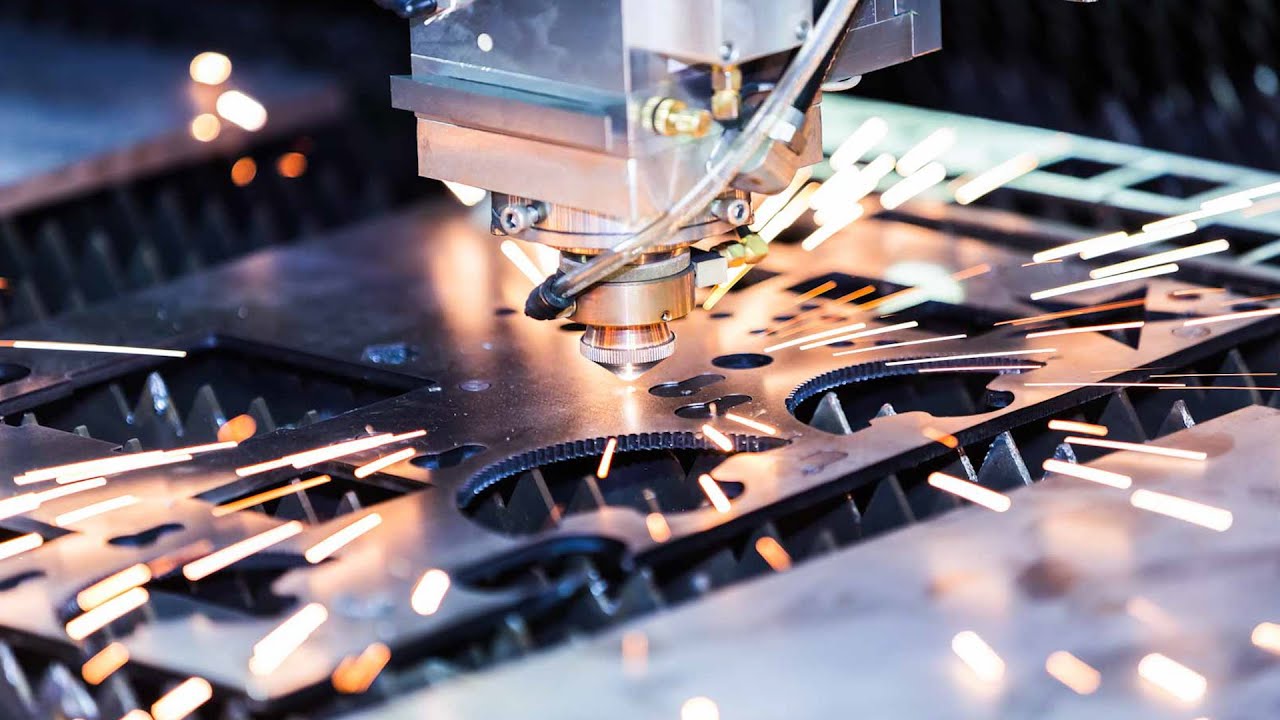
After the selection of materials, there is precision fabrication. Steel components are shaped using high-accuracy advanced CNC cutting and bending machines. These machines make sure that mounting holes, cable holes, and ventilation holes are made to the specification. Frame construction and structural construction are then performed using precision welding. The quality of welding should be constant and provide support to the cabinet’s strength and safety requirements, particularly to wall-mounted designs that should be able to support the equipment over extended durations.
Assembly and Integration of Functional Components
The functional components of an assembly, like mounting rails, doors, locks, hinges, and cable management parts, are installed during assembly. Manufacturers make sure that these elements fit together to the dot and work together. The lock-out systems are also checked in terms of reliability, and the doors are also checked in terms of alignment and angles of opening. Perforated panels or fan mounting are some of the ventilation features that have been designed to facilitate thermal management. In the actual installations of the cabinet, proper assembly means that the cabinet performs safely and efficiently.
Quality Control and Compliance Testing
The control of quality forms the core of complying with industry standards. During the manufacturing process, tests are carried out to ensure the dimensions, material thickness, strength of weld, and finish. Wall-mounted cabinets are load-tested after they have been completed to ensure that they can safely bear the rated equipment weights. Other inspections can be door operation, grounding, and defect inspection. These processes are used to accomplish the requirement of every cabinet to attain internal standards of quality and the expectations of the external industry.
Packaging and Readiness for Installation
All cabinets are well-packed to avoid breakages along the way to the shipment point. Finishes and structural integrity are conserved using protective materials. They are installed with installation hardware and documentation to assist in correctly mounting and following the safety precautions. The wall-mounted cabinet has gone through a managed production and quality control process by the time it gets to the customer, which is meant to be of the standards of the industry.
Commitment to Standardized Manufacturing Excellence
The production of wall-mounted cabinets to the standards of the industry needs a set of engineering skills, accurate production techniques, and high-quality control. Through these practices, manufacturers will provide solutions that are reliable enough to support contemporary network environments, secure user safety, and offer long-term performance. This modular style enables wall-mounted cabinets to continue being an IT infrastructure asset that is trusted all over the globe.
Conclusion
To adhere to the industry requirements when producing wall-mounted cabinets is not a one-process endeavor but a well-regulated production system. Since engineering design and material choice are a part of the cabinet and precise fabrication, surface finishing, and quality testing, all the steps help in the safety, strength, and reliability of the cabinet. The example of manufacturers, like Suntec IT, makes it clear that compliance with the accepted standards provides the reliability of the performance, as well as security of the equipment installed, and promotes the stability of the functioning in the long term. Wall-mounted cabinets can be regarded as reliable infrastructure due to the standardization of the manufacturing processes, which are compatible in the IT and networking setting of the present times.