
The structural components required in aerospace and medical equipment are not allowed to fail, shift or drift out of tolerance. France is not merely a support framework in the two spheres. It influences safety, accuracy and reliability in the long-term. The metal frames fabrication in these areas demands strict control of the dimensions, consistency of the material used and strict control of the process. ShincoFab constructs frames made out of sheet metal that satisfy these expectations through emphasis on precision forming, controlled welding and rigorous inspection at each production phase.
Why Aerospace and Medical Frames Are Different
Frames used in aircraft systems or medical devices operate under conditions where small errors create serious problems. Vibration, thermal cycling and weight limitations are all important in aerospace assemblies. Hygiene, electromagnetic control, and mechanical stability have a direct impact on patient safety and the accuracy of the imaging in the medical system. These structures usually combine electronics, sensors and precision subassemblies in contrast to the general industry type of frames. The structure of the holes, flattening and alignment determine the performance of the completed system. That is the reason why fabrication in these industries is more related to precision manufacturing as compared to heavy metal work.
Material Selection for High-Reliability Frames
Material choice shapes performance, weight, and durability. ShincoFab works with alloys commonly specified in aerospace and medical drawings. Aluminum alloys such as 5052 and 6061 are used when strength must be balanced with low mass. They are common in avionics housings, instrument frames, and portable medical units. Stainless steel, typically 304 or 316, is selected for corrosion resistance and cleanability. It is widely used in imaging equipment, surgical device structures, and laboratory systems. Carbon steel is still used for internal support frames where higher weight is acceptable, and coatings provide protection. Traceability matters as much as the alloy itself. Material Test Reports and certification records ensure the metal meets the mechanical and chemical requirements stated in the design.
Precision Cutting and Forming Processes
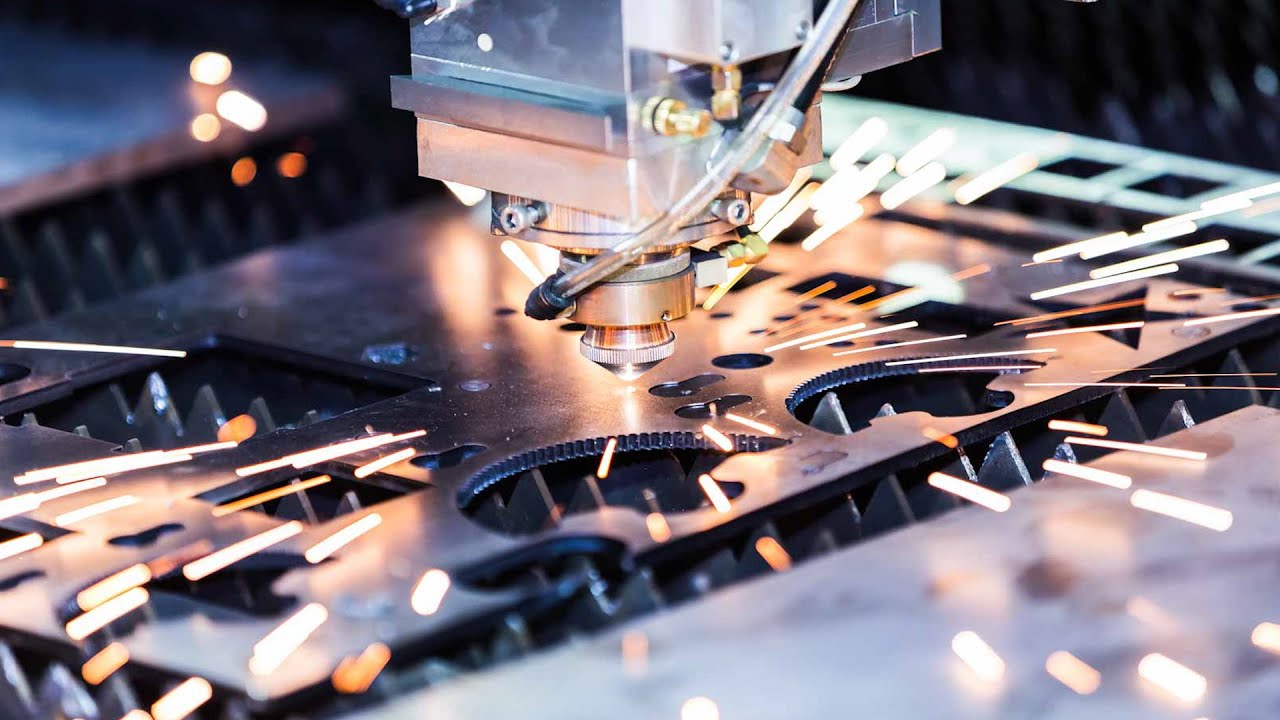
Dimensional accuracy starts with cutting and forming. CNC laser cutting and punching produce repeatable profiles, slots, and ventilation patterns. These features are not only cosmetic. In aerospace and medical frames, they control airflow, cable routing, and mounting alignment. Press brake forming is handled with attention to bend sequence and tooling selection. Consistent bend angles and minimal distortion keep panels square and assemblies easier to align. Forming data is monitored to prevent variation between batches, which is important when frames must fit with machined parts or molded components.
Welding Control and Structural Stability
Welding is one of the biggest risks in metal frame fabrication. Heat input can pull a structure out of the square or introduce stress that shows up later in service. ShincoFab addresses this through fixturing and welding sequencing. Custom fixtures hold components in position before and during welding. Welders follow planned sequences that balance heat across the structure. Techniques like stitch welding reduce distortion. Post-weld machining restores flatness for critical mounting surfaces.
Tolerance Management and Inspection
Aerospace and medical assemblies often specify tighter tolerances than standard sheet metal work. ShincoFab works to ISO tolerance classes where appropriate, and tighter limits where drawings call for them. Inspection uses calibrated gauges and coordinate measuring equipment to verify hole locations, flatness, and overall geometry. First Article Inspection reports document that the initial parts meet requirements before production continues. This documentation is important for regulated industries that require traceable quality records.
Integration of Hardware and Subassemblies
Many aerospace and medical frames are not shipped as bare weldments. They include installed hardware such as PEM fasteners, threaded inserts, and mounting studs. Installing these features during fabrication improves alignment and reduces assembly time later. ShincoFab coordinates hardware insertion with forming and welding steps so that heat and mechanical loads do not damage installed components. This approach helps customers receive frames that are closer to the final assembly condition.
Documentation and Process Discipline
Both the aerospace and medical sectors expect documentation that proves how a part was made. The deliverables include production travelers, inspection records and material certificates. Recurring process control minimizes variation between production cycles, which may be important when the product in production has a long service life, and the replacement components required are identical to those in the previous production.
Conclusion
Aerospace and medical systems metal frame manufacturing does not just involve the shaping and joining of metal. It demands control over materials, geometry, heat, and finishing, supported by clear inspection records. ShincoFab uses organization fabrication procedures, accurate machinery, and rigorous quality inspection to manufacture frames that are useful in maintaining delicate electronics, imaging equipment, and flight apparatuses. What is obtained is the structural parts that will be of high technical quality, and will work well in areas where failure is not an option.
