How to Source a Custom Water Jug Manufacturer for Branded Beverage Containers
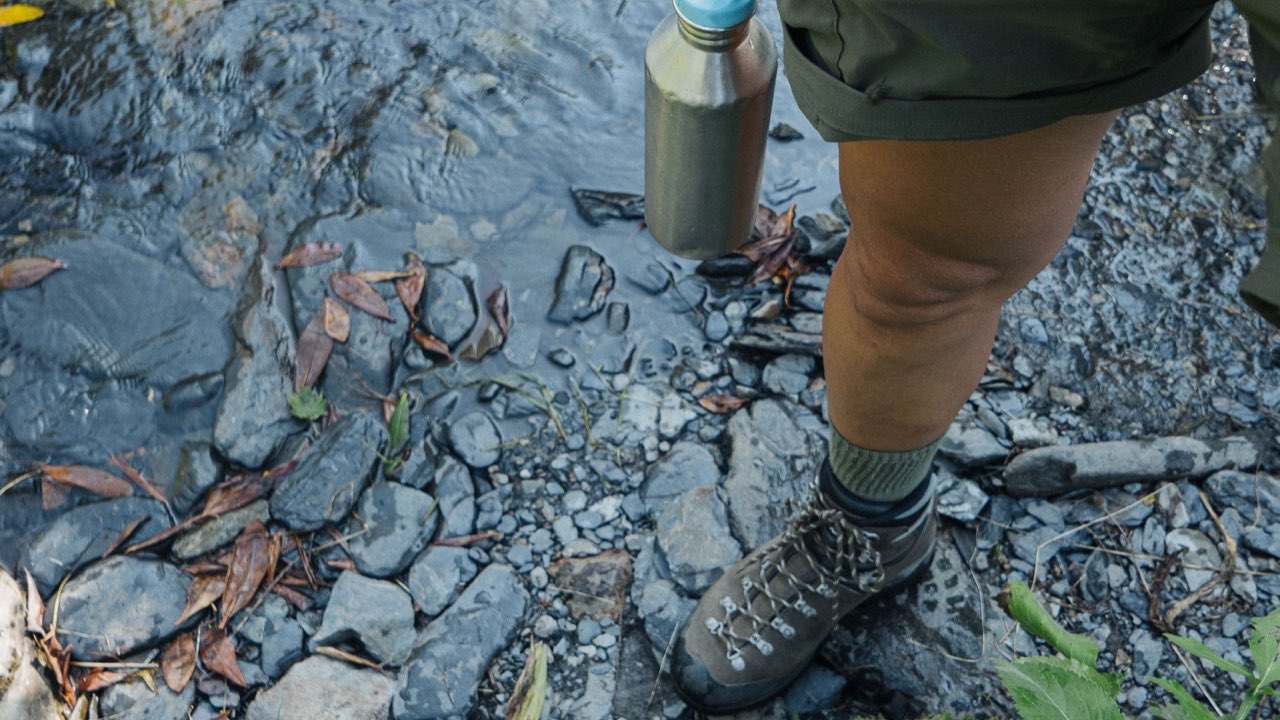
The market for branded beverage containers — water jugs, growlers, insulated pitchers — has expanded well beyond the obvious buyers. Craft breweries need custom growlers. Outdoor brands want co-branded hydration vessels. Corporate wellness programs order large-format water jugs for office use. Event companies source custom pitchers for hospitality applications. The common thread is that all of these buyers need a water jug manufacturer who can produce to specification in meaningful quantities, not just sell catalog products in bulk.
Finding the right manufacturing partner for a custom project requires a different process than ordering off a supplier’s product page.
Defining the Product Before Sourcing the Factory
Custom manufacturing conversations go more smoothly when you arrive with a clear specification rather than a vague brief. The variables that define a water jug or growler for manufacturing purposes:
Capacity: expressed in liters or fluid ounces. Common sizes are 32oz (roughly 1L), 64oz (roughly 2L), and 128oz (roughly 3.8L / 1 gallon). Non-standard capacities are achievable but add cost because they typically require custom molds rather than adaptations of existing tooling.
Material: 304 stainless steel (18/8) is the standard for most applications — food-safe, corrosion-resistant, and well-suited to both hot and cold contents. 316 stainless (18/10) adds molybdenum for better resistance to chloride corrosion, relevant for products that will frequently contain electrolyte drinks or be used in saltwater environments. For growlers intended for carbonated beverages, the closure mechanism matters more than the steel grade — the seal needs to hold pressure.
Insulation: single-wall construction is lighter and less expensive, appropriate for applications where temperature retention is less critical. Double-wall vacuum insulation eliminates condensation and maintains temperature significantly longer — the standard specification for any premium-positioned product.
Closure type: screw caps, swing-top (bail) closures, and flip-top handles each have different applications. For carbonated beverages like craft beer, swing-top closures with gasket seals are the traditional choice — they handle the pressure that builds as the carbonation comes out of solution. For still water and hot beverages, screw caps and flip-top handles are more common.
Manufacturer vs Distributor: Identifying Which You’re Talking To
The stainless drinkware supply chain has a large number of trading companies sitting between factories and buyers. Trading companies can be useful intermediaries — they aggregate from multiple factories, handle export logistics, and sometimes offer better communication than factories deal with directly. They also add a margin layer and can’t answer detailed manufacturing questions firsthand.
For custom product development, a direct factory relationship has advantages: you can discuss tooling decisions, request factory visits or third-party audits, and have more influence over quality control processes. For standard catalog products ordered in bulk, a reputable trading company may offer equivalent results.
To distinguish between a factory and a trading company, ask: what is your production capacity per month for this product category, and what is your facility address? Can you provide a factory audit report or accept a scheduled third-party audit? Factories answer these questions directly. Trading companies deflect or need to check with “their factory” before responding.
Steel Grade and Wall Thickness in Specifications
When you receive a product specification sheet or quotation from a potential manufacturer, two numbers warrant particular attention: the material grade and the wall thickness.
Stainless steel for food contact should be specified as food-grade (304 or 316). Test reports confirming food safety compliance — FDA in the US, LFGB in Europe — should be available on request. A manufacturer who can’t produce these reports may be using lower-grade steel or may not have had the product tested.
Wall thickness for the inner and outer walls is typically stated in millimeters. Thicker walls feel more substantial, are more resistant to denting, and for vacuum-insulated products generally correlate with better insulation performance. Typical range is 0.5mm to 0.8mm per wall. A product described only as “double-wall stainless steel” without wall thickness specification should prompt the question — thinner walls at lower cost is a common way to hit a price point while maintaining the marketing claim.
Minimum Order Quantities for Custom Projects
Custom molds for a proprietary jug shape require tooling investment — typically several hundred to a few thousand dollars depending on complexity — and minimum production runs that justify the setup cost. For fully custom shapes, MOQs of 500 to 2,000 units are common. For custom decoration (logo engraving, custom powder coat color) on an existing factory shape, MOQs are typically lower.
If your required volume doesn’t meet minimum order thresholds for a fully custom design, consider whether an existing factory shape with custom surface treatment achieves enough of your differentiation requirement. Laser-engraved logos on a standard growler shape can be distinctive without requiring custom tooling.
Sample Validation Before Production Commitment
Request a production-representative sample before committing to a full order. The sample should be the actual material, wall thickness, closure mechanism, and surface finish of what will ship — not a hand-assembled prototype that doesn’t reflect production conditions.
For growlers and jugs intended for carbonated beverages, test the seal under simulated conditions: fill with carbonated water, close the seal, and check for pressure loss over 24 hours. For vacuum-insulated products, fill with boiling water and check the exterior temperature. For any product with a powder-coat exterior, test durability with light abrasion against the surface.
A manufacturer who won’t provide samples, or who sends samples that visibly differ from what was specified, is providing useful information about how the production order will go.